Manufacturing & quality
How a Brix tarp is made.
Most tarps fail at the same places: thin material, cheap filler, weak edges and loose grommets. We make ours so those are the strongest parts. Here is every step, from raw material to the box on your doorstep.
The process
Eight steps. No shortcuts.
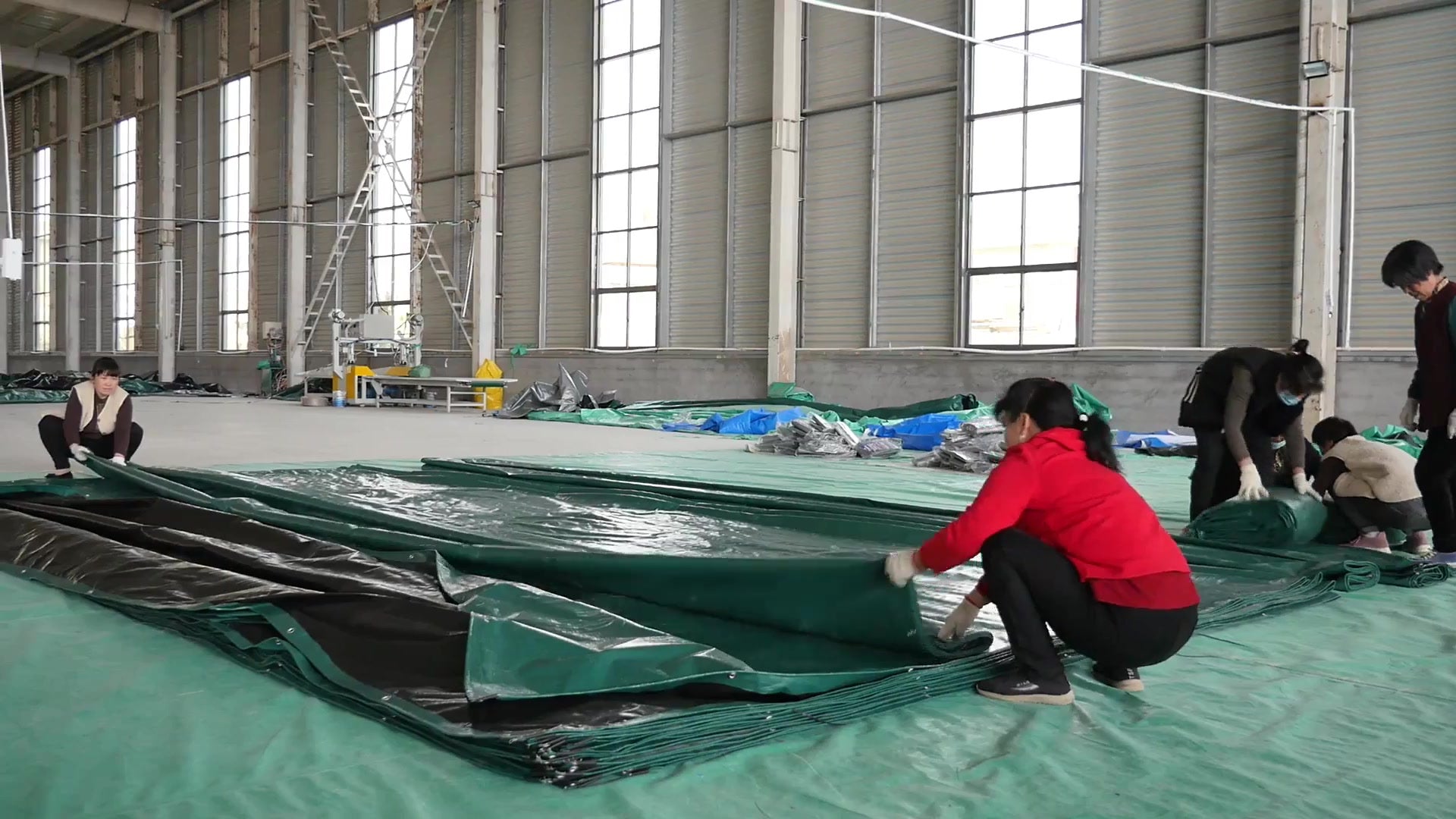
This is how our woven poly tarps are made. Every step is there to make the tarp stronger, thicker and the right size.
Step 01 · Material100% virgin polyethylene
It starts with new polyethylene resin, never recycled filler. Virgin material is stronger, more consistent and lasts longer in the sun.
 Step 02 · Tapes
Extruded into strong tapes
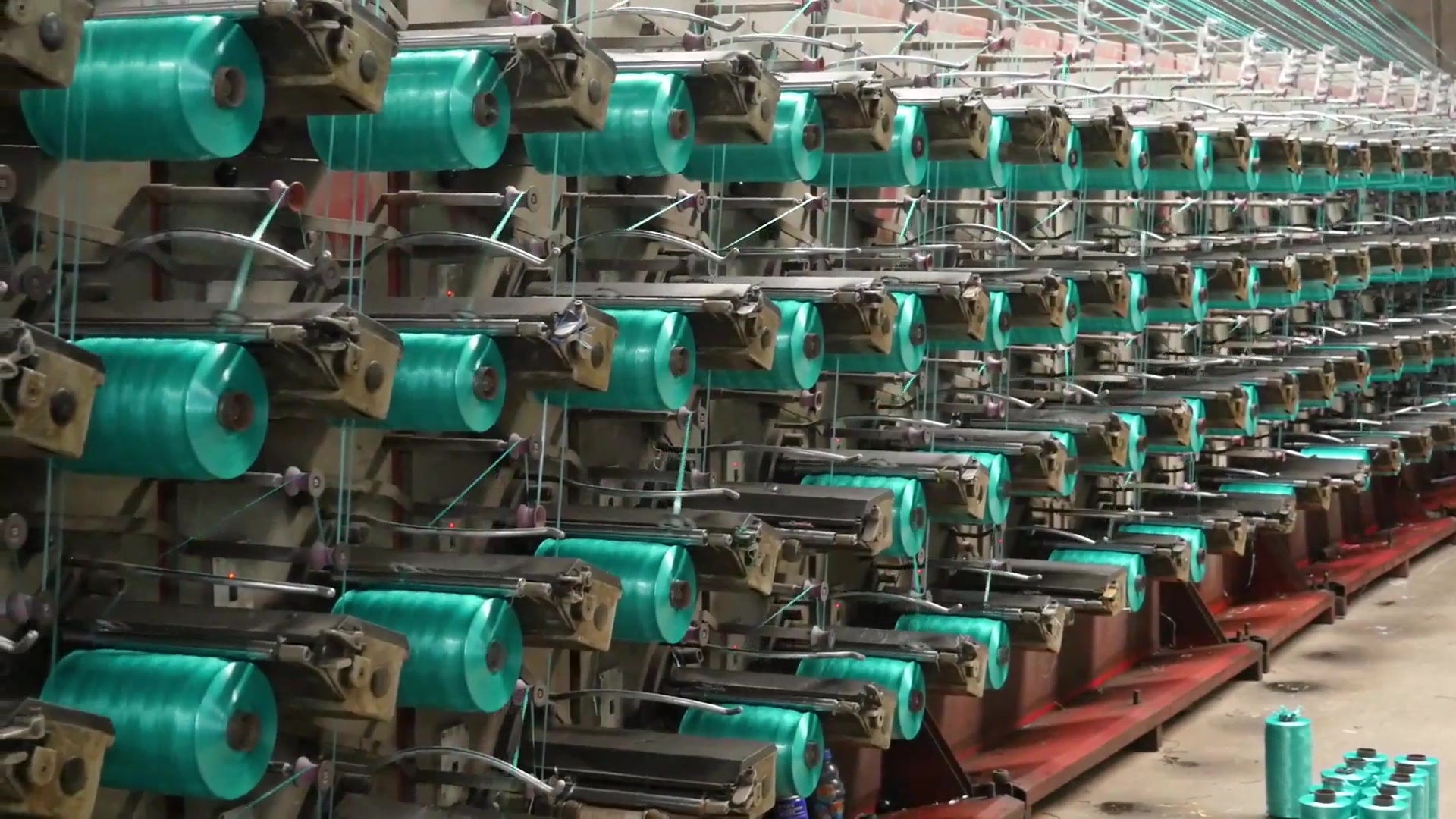
The resin is melted, formed into film and cut into narrow tapes. Those tapes are the threads of the tarp.
 Step 03 · Weaving
A tight cross weave
The tapes are cross-woven into a dense fabric. A tighter weave resists rips, punctures and stretching.
 Step 04 · Lamination
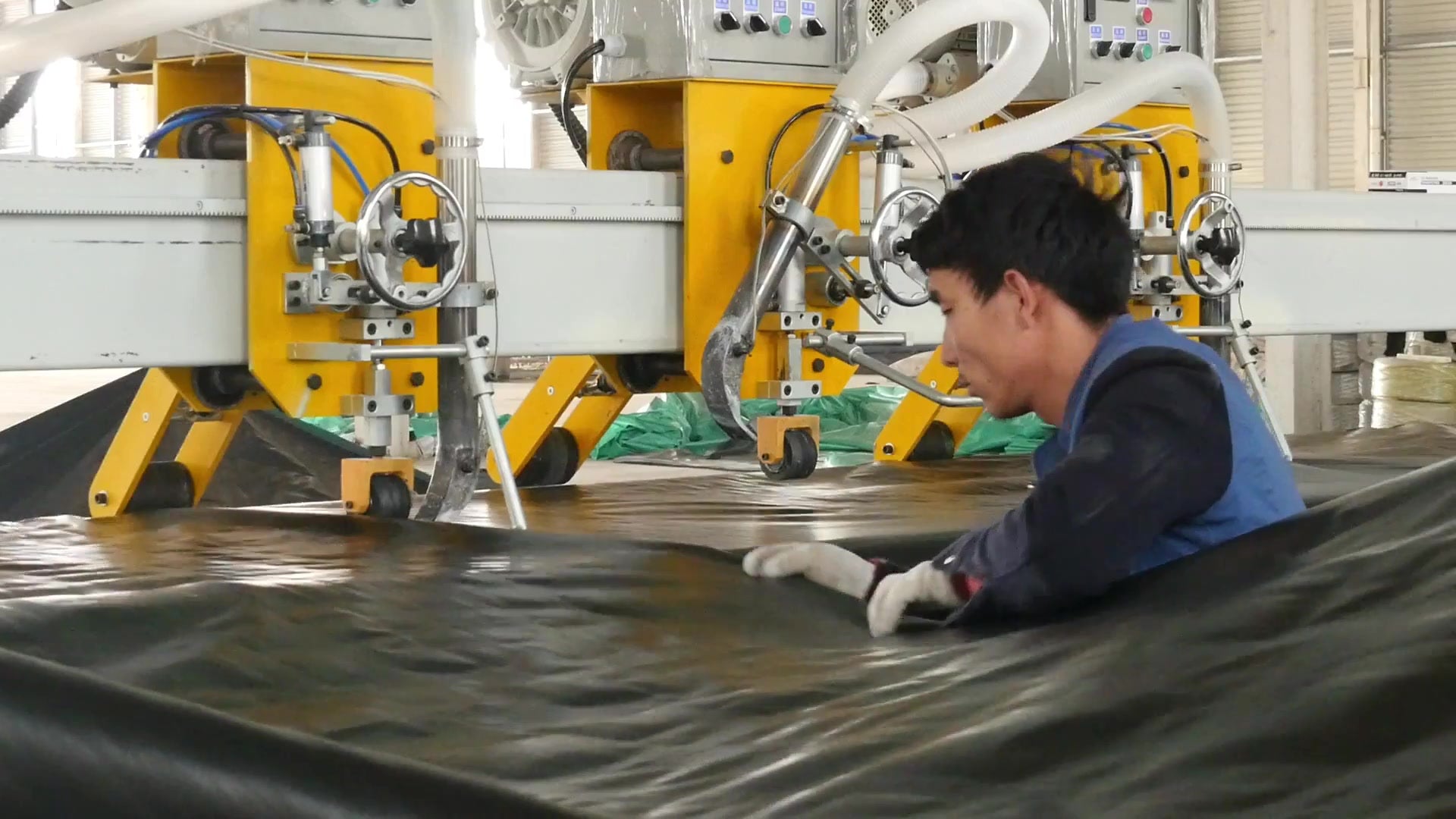
Laminated on both sides, UV treated
Both faces of the woven core get a coating. That makes it waterproof and adds UV resistance, so it holds its color and strength outdoors. Thicker grades get more material, from 5 mil all the way to 22 mil poly.
 Step 05 · Hemming
PP rope sealed into the hem
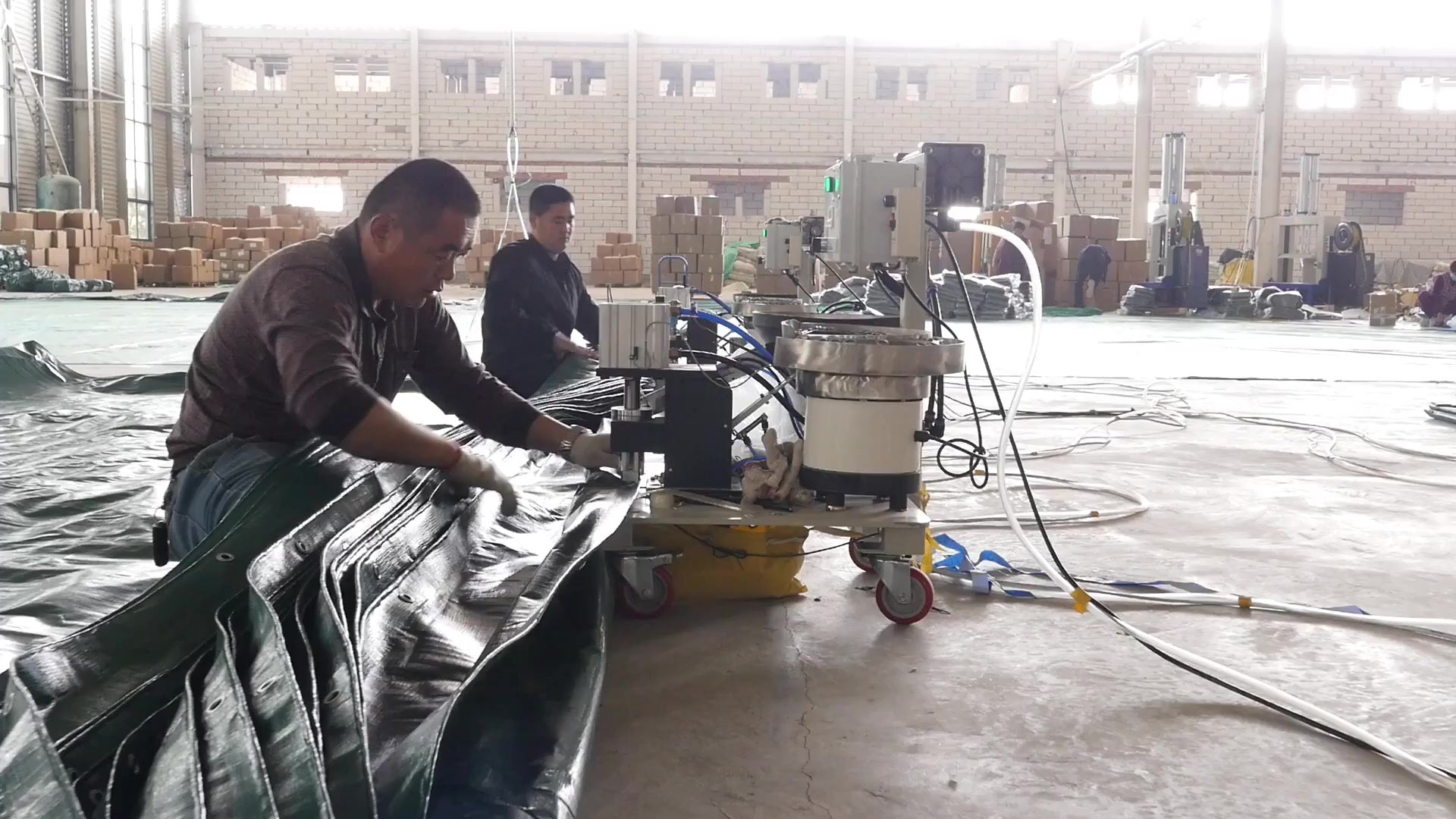
The edges are folded and sealed with polypropylene rope inside, so the border holds its shape under strap tension instead of tearing.
 Step 06 · Corners & grommets
Reinforced corners, grommets all around the edge
Every corner gets a reinforced plastic patch, and rust-proof metal grommets are set along every edge.
 Step 07 · Measuring
Measured for finished size and thickness
The tarp is measured after hemming, so the label shows the true finished size. Thickness is checked with a digital caliper.
 Step 08 · Packing
Folded, labeled and shipped
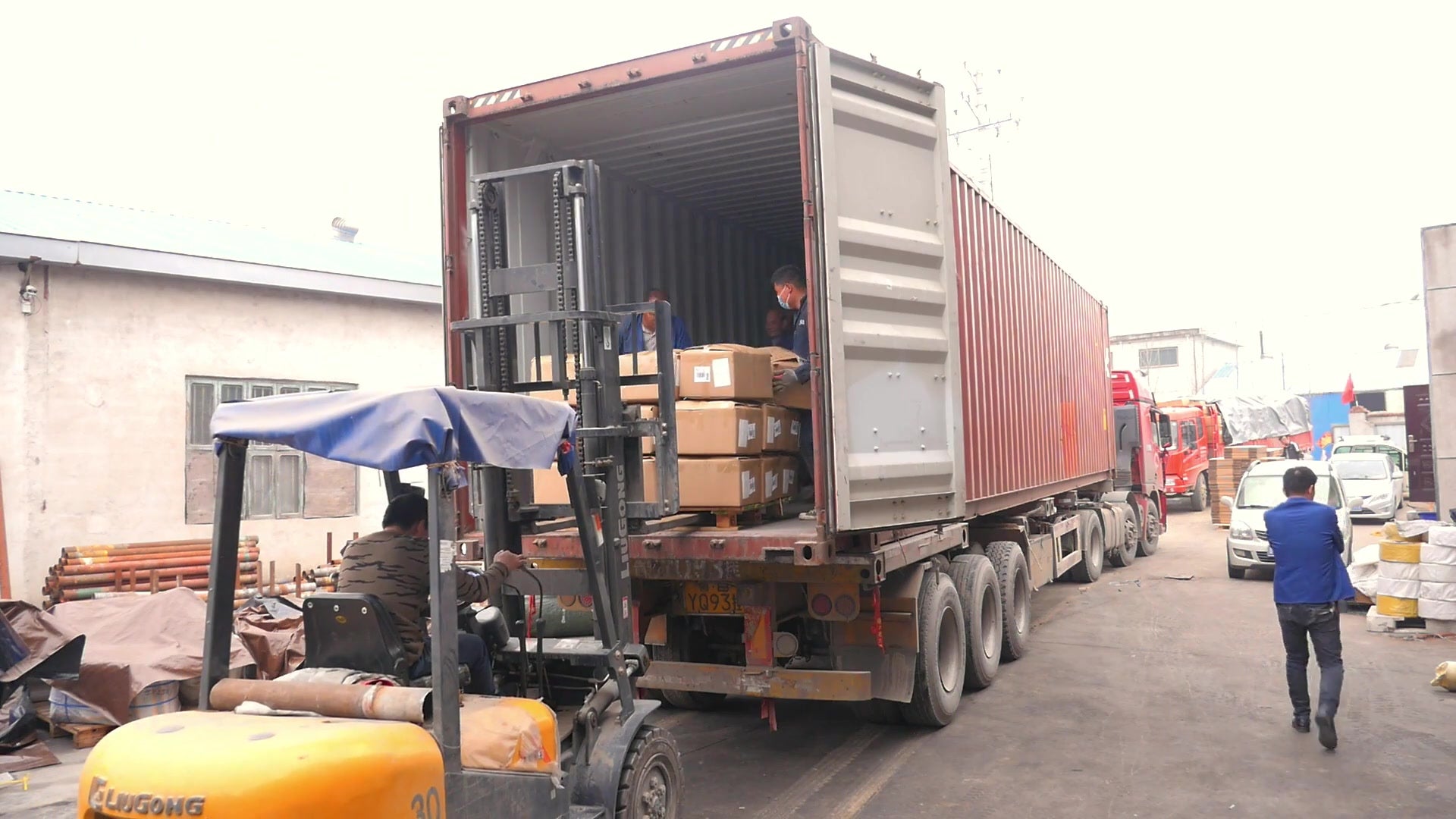
Each tarp is folded and packed with its size, thickness and color on the label, then shipped from the warehouse closest to you.
Quality checks
Measured, not guessed.
A tarp is only as good as its numbers. These are the checks behind every label.
Thickness, by caliper
Thickness is measured with a digital caliper. A 20 mil tarp reads 0.51 mm and a 22 mil reads 0.56 mm. What's on the label is what's in your hands.
Finished size
Every size is measured after hemming. A 20×30 covers a true 20×30, not a few inches short on every side.
Grommet spacing
Metal grommets all around the edge, so you're never far from a tie-down point.
Weave & material
A tight cross weave of 100% virgin polyethylene, laminated on both sides for waterproofing and UV resistance.
Every type, in detail
Different jobs. Different builds.
Each product is built differently for what it has to do. Open one to see how it's made and what it's for.
Poly tarps5 – 22 mil · Core Tarps, Protarp, Tarpco Safety
- Tightly woven core of 100% virgin polyethylene, laminated on both sides
- Waterproof, UV resistant, rip and tear proof
- PP rope in the hem, reinforced plastic corners
- Rust-proof metal grommets all around the edge
- 36 true finished sizes, up to 100′×100′, in solid colors and prints
Clear vinyl tarps20 & 30 mil · Core Tarps
- Dense, solid vinyl sheet with no weave, for the thickest cover in our range
- Fully waterproof and abrasion resistant
- Clear, clear blue and clear grey, so light comes through
- For porch and patio enclosures, greenhouses and weather walls
Canvas tarps14 oz & 20 oz · Protarp
- Heavy woven canvas, weighed by the ounce: 14 oz Heavy Duty and 20 oz Extreme Heavy Duty
- Water resistant and breathable, so moisture can escape
- Tan, off white, olive, brown and grey
- For hay, machinery, furniture and long-term covers
Mesh tarps250 GSM · Core Tarps
- Open-weave 250 GSM (7.5 oz) 100% virgin polyethylene
- Lets air through while giving about 65% shade
- Solid brass grommets every 2 feet
- For dump trucks, shade, fences and kennels
Privacy fence screens200 GSM · SEALTECH
- Ultra heavy duty 200 GSM knitted screen
- Bound edges with rust-proof brass grommets, and cable ties included
- Six colors, 32 sizes
Debris netting1/16″ & 1/4″ · SEALTECH
- Heavy duty safety netting rolls for scaffolds and building faces
- 1/16″ and 1/4″ mesh openings
- White, blue, orange and black
Reflective insulation3, 5 & 10 mm · SEALTECH
- Reflective insulation rolls that bounce radiant heat away
- 3, 5 and 10 mm thick, in 40 roll sizes
Weed barrierPremium Pro · SEALTECH
- Woven landscape fabric that blocks weeds and lets water through
- Three weights, 24 roll sizes
FAQ
Quality questions.
Why does virgin polyethylene matter?
Recycled filler makes a tarp weaker and less consistent, and it breaks down faster in the sun. Virgin material keeps its strength, color and flexibility longer.
What does weave count mean?
It's the number of tapes per inch in each direction, for example 14×14. A tighter weave makes a stronger, more tear-resistant core. Each product page lists its own specs.
Why rope in the hem?
The rope carries the pull from tie-downs along the whole edge, so the hem doesn't stretch or rip at the grommets.
What's the difference between mil, oz and GSM?
Mil measures thickness (1 mil = 0.001″) for poly and vinyl. Ounces and GSM measure weight per area, for canvas, mesh and fence screens. See the thickness guide →